REELpoetry presents Texas and Houston through video poetry
The 2025 REELpoetry International Poetry Film Festival’s online programming proved to be an insightful showcase of an array of talent. REELpoetry then returned to home base with an in-person event in Houston, TX that highlighted both Texas and Houston-based creatives. After untangling highways and patchworks of buildings, these video poets could be found anywhere from Montrose to space, and gas stations to family homes. They wrestle with things left unsaid, advocate for their communities, and dance in hallways. To write from Texas or Houston is to bridge the gap between outside perceptions and what truly lies inside their hearts and minds.
The in-person event was held at St. Thomas University and organized into three main segments: “Screening Texas Poets,” “Youth Creatives,” and Location / Houston. To begin, “Screening Texas Poets” packed a punch by facing gun violence, war, and borders head-on. The youth submissions also rose to the occasion with works dedicated to their community and friends. Location / Houston premiered five original video poems by Houston-based poets and filmmakers, which feel like intimate portraits of Houston neighborhoods, homes, and relationships. Altogether, these video poems provide us with a primary archive of the depth and breadth of expression in Texas and Houston.
Screening Texas Poets: Using Video Poetry Boldly
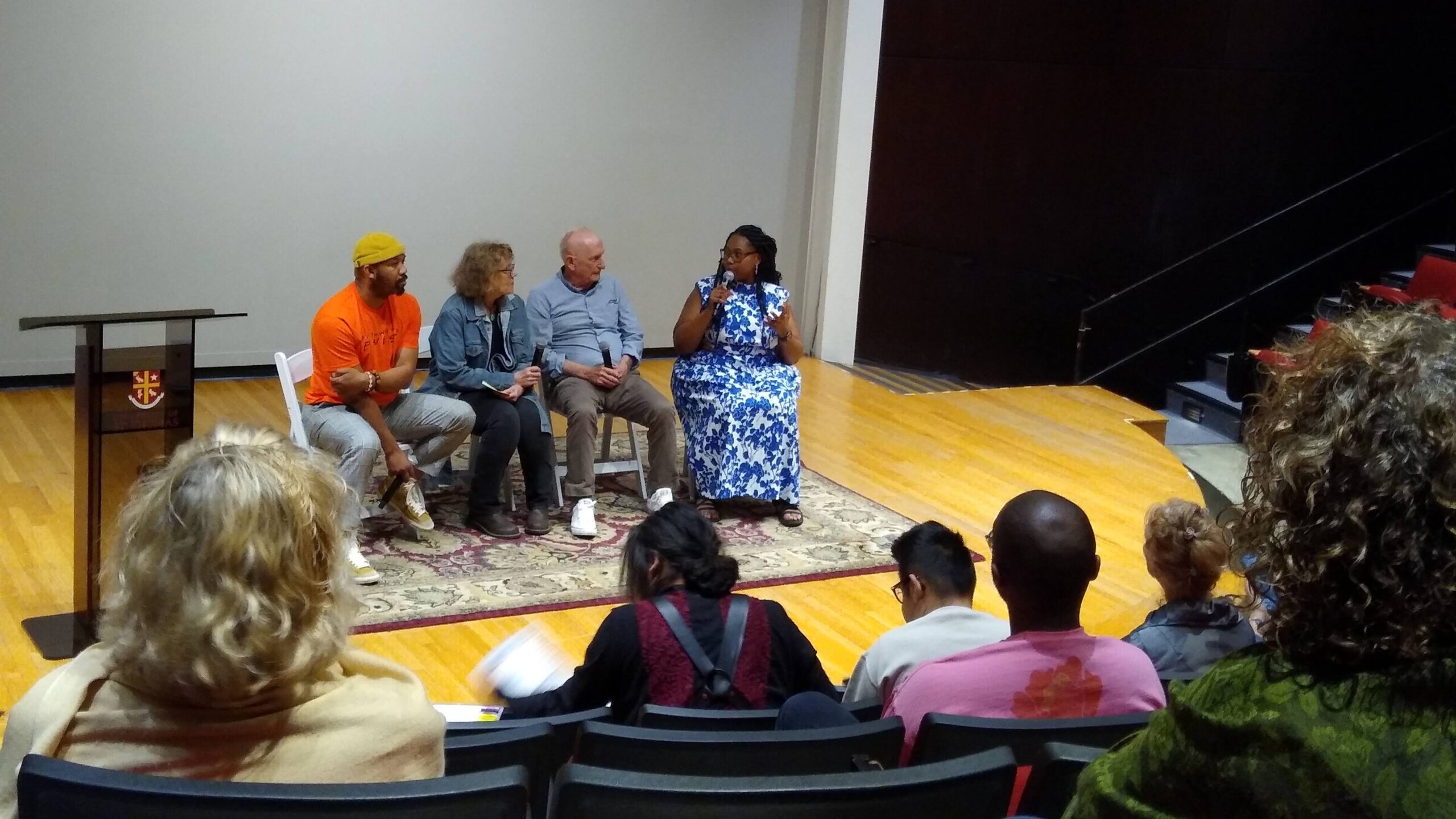
“Screening Texas Poets” dove headfirst into heavy and controversial topics from immigration to police brutality and war. It included the poet’s recitation, followed by a video adaptation by Outlier Moving Pictures and a pre-recorded Q&A. The featured poets, included the current president of the Texas Institute of Letters, David Bowles, and three previous Texas or Houston Poet Laureates: Amanda Johnston, Deborah D.E.E.P. Mouton, and Outspoken Bean. Jack Cochran and Pam Falkenberg, the directors of Outlier Moving Pictures, moderated the in-person Q&A with Mouton and Bean. Overall, the video poems were a testament to poetry’s versatility and ability to be sharp and incisive.
Gun Violence and Police Brutality
Amanda Johnston’s “Facing US (after Yusef Komunyakaa)” is written in first person. As a result, the viewer becomes a protestor who imagines their name on protest banners, and more. The video poem adaptation further enhances this effect with footstep sounds, movement, and blurry, nighttime footage. In the virtual Q&A, Johnston expressed that “…the most powerful thing [poetry] can do is connect us…” and that we should care about our communities by choosing action over silence. Hence, the video poem is an excellent example that employs interconnectedness and empathy—themes that run across various festival submissions—by shifting point of view and creating powerful imagery.
“Kel-Tec PF-9” by Deborah D.E.E.P. Mouton takes a different approach, reading almost like a news piece about an auction for a pre-used gun. Notably, there’s no recitation in the video poem. Rather, accompanying the text of the poem are images and audio of Trayvon Martin’s family, court proceedings, and the gun’s previous owner, George Zimmerman. The audio and text lingered long after its end, leaving the viewer to mull over “a bargain for any connoisseur of American heartbreak.” During the in-person Q&A, Mouton mentioned how difficult it can be to create poems with social criticism because you want them to expire, not to persist and remain relevant.
War and Borders
“The Wall” by David Bowles goes straight to the point by declaring that small minds love lines. Instead, the poem declares that borders are permeable like membranes. In the same spirit, its video poem adaptation boldly includes images of historical (e.g., Joseph Stalin) and modern-day politicians (e.g., Greg Abbott). As for the wall itself, viewers see its construction, its various solitary fragments, and people crossing. In the pre-recorded Q&A, Bowles explained that poets have “…lyrical ways of stirring [people’s] emotions, of prodding them into action, of making them remember our shared humanity…” Bowles also expanded on the effects of small minds by asserting that it can be devastating, due to its focus on extracting, drawing lines, taunting, and justifying violence.
“Lower cased shells at the capital” by Outspoken Bean takes us to Ukraine to witness the suffering and strength of Ukrainian people. The video poem adaptation includes politicians and scenes from war. Yet, the strength of the poem lies in flipping the script: real cowardice is found in mighty tanks. One way to define poetry, according to Bean’s response during the virtual Q&A, is using words, learned forms, and literary devices in a way that speaks truth to power. Bean also added that “[w]hen you want to get to the heart of something…you need to be a cultural mirror to what’s happening.” This idea resonates with Mouton’s response about the expiration and relevance of themes in artistic works. Hence, the time to create is always now.
Youth Creatives: Using Video Poetry to Support Others
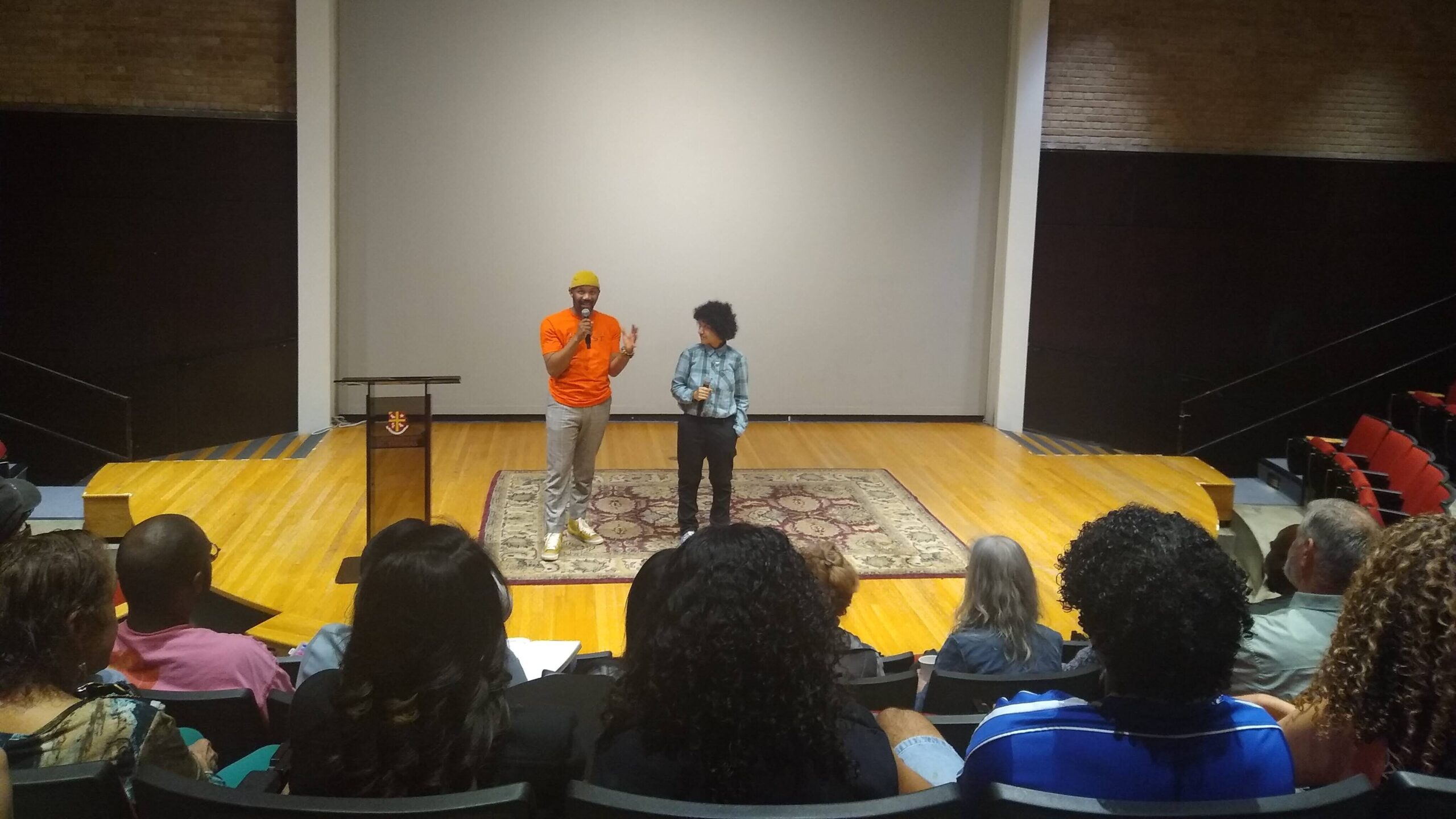
“Youth Creatives” demonstrated the importance and impact of literary programs like Writers in the Schools (WITS) for young artists. WITS provides mentorship, workshops, and performance opportunities to local students, thus giving them an opportunity to express themselves and advocate for what they believe in. Outspoken Bean, the WITS Community Program Coordinator, hosted the segment. Attendees also had the chance to hear one youth poet, Zen, speak about the creative process and praise the city’s diversity. The two featured youth video poems were high-quality works that highlighted Bean’s point: “If we don’t pour into our youth, someone else will.”
Isabella Diaz-Mira’s video poem, “Alien,” is a poignant piece that juxtaposed and played with the words “immigrants” and “aliens.” The video poem includes footage of protestors with a clear message: “We come in peace.” Diaz-Mira’s strength is transforming language that is “othering” to language that humanizes. Zen’s “Stories” is a video poem that feels up-close and personal. It has shots of the city, clips with friends dancing, and Zen reciting parts of the poem to the camera. It was touching to see the bonds between friends in different spaces around Houston.
Location / Houston: Collaboration in Action
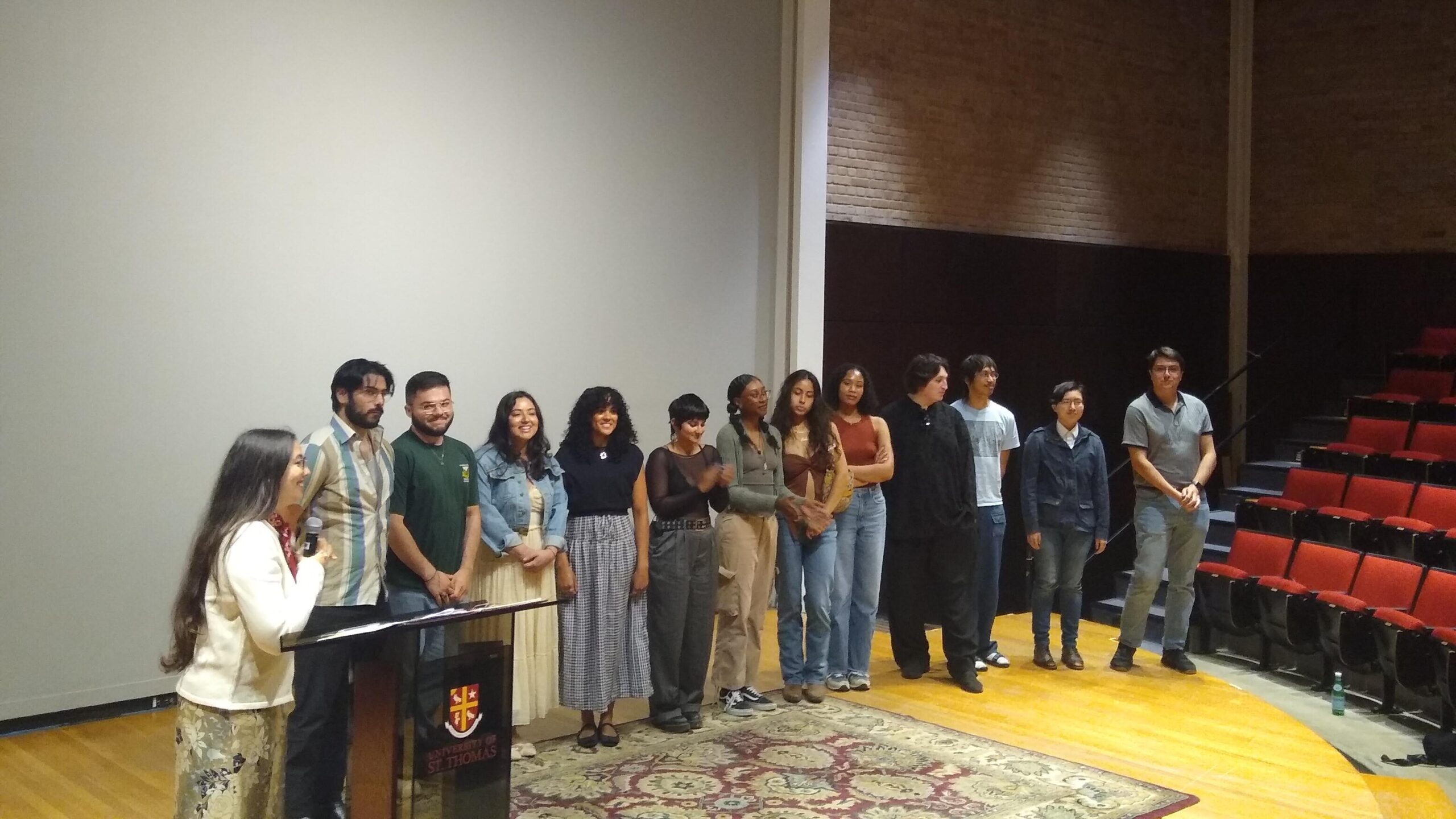
Location / Houston showcased five different collaborations between Houston-based poets and filmmakers. Themes included identity, culture, sexuality, family, immigration, and war. Prior to each screening, both the poet and filmmaker spoke about themselves and their experience working together. The participants were challenged to try something new and along the way found commonalities between each other. Together, the teams created unique windows into the lives that make up the city of Houston.
The City and its People
“Its Metaphor is the Lack of it,” written by Jack Morillo and directed by Jacob Spooner, takes us on a ride through Montrose. It’s a neighborhood with an interesting history centered around Houston’s diverse subcultures, including the LGBTQ+ community. In the video poem, the city is like a page filled with reflections on intimacy, words, emptiness, and presence. On the screen, the colors change, just as the city and its neighborhoods change. Amidst the meandering streets and thoughts, the poetic voice wonders: “Didn’t it use to be gayer?”
The video poem “Alter/Nation,” written by Ivy Li and directed by Aaron Thomas, also moves throughout Houston’s streets, yet with a focus on immigrant communities. During the introduction, the team talked about their use of black and white stills, their sources of inspiration, and more. The result was a video poem showcasing various vignettes that invite us to slow down and listen to immigrant stories. At the same time, the poem creates a sense of connection between immigrant communities and Houston as a whole, both on earth and up in space.
Meditations on Family and Self
“This Station is My Father,” written by Isaac Salazar and directed by Timoteo Cortez, transforms the gas station into a stage where masculinity and fatherhood are performed. Interestingly, Salazar said he didn’t consider himself a narrative writer, yet Cortez noted he clearly saw a storyline of emotion. The video poem specifically wrestles with a complicated father-son relationship. It’s a game of hide-and-seek that centers unspoken knots, fuel, and authority, which leaves a powerful impression on the viewer. We’re left thinking about the thin balance between decay and growth.
“Please Take Off Your Shoes and Never Leave” was written by Aarohi Sheth and produced by Girls Night Out Productions. The video poem primarily takes place in a home as the poetic voice tackles the themes of abuse and degradation. According to the team, it was created with a desi influence and developed through a storyboard. All the elements worked together to build a tension that teeters between entrapment and freedom. As a result, we can feel the weight of the words, the weight of emotion, and the weight of that house.
“Mirrors,” written by Nour Baba and directed by Chandler Pacheco, is an intimate portrait of a Palestinian family’s history and traditions that reflects on brokenness and war. In contrast to the previous two video poems, which center relationships between family members, this video poem brings to light how the family struggles with the Nakba’s aftermath. Prior to starting, the video poem’s themes were introduced as indigenous identity, imperialism, and connection/disconnection. Balancing between personal and public spaces, the video poem wove together footage of the family home with clips of street protests, as well as spoken monologue. At the end, the speaker affirms to us that these broken pieces of herself reflect us all.
Conclusion
The in-person portion of the REELpoetry International Poetry Film Festival shone a light on the inner thoughts and concerns of local Houstonians and Texas poets. Yet, these themes also echoed those found in other video poems from across the United States and the world. These video poems touched on humanity (or lack thereof), family, relationships, and the body. The poets showed us how to be bold, creative, and authentic. Each had their own unique approach that resonated far beyond the city limits and Texas itself. The event showed us that age and background are not obstacles for powerful expression. It was a celebration and affirmation of talent, as well as an invitation to continue the conversation and further engage with the art form.